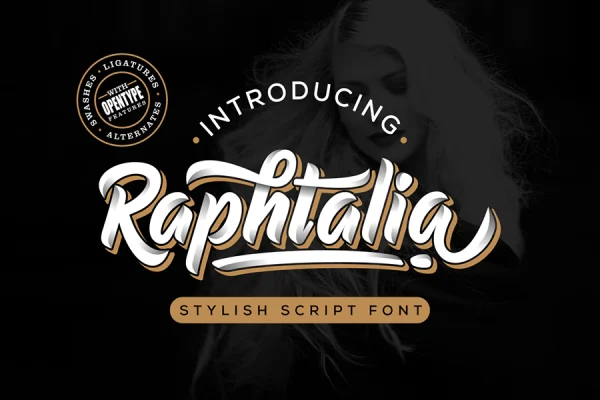
One day I was doing my monthly grocery shopping, flipping through a promotional brochure from a large retail chain, when I stopped on the front page. The slogan on the brochure was set in a font I knew very well, because I had drawn it myself: Raphtalia.
Seeing your font in a big brand’s campaign is exciting. But it also raises one important question: did they buy a license? This is the true story of what happened next, and what businesses and designers can learn from it.
Step 1: Checking the License Records
Big Weekend Sale
License check
Our website: no Corporate license
Marketplaces: no Corporate license
Agency purchase: none found
The first thing I did was not to accuse anyone. I went back to my records. Raphtalia is sold on our website and on several marketplaces, so I checked the sales data on every platform where the font is available.
A national retail chain using a font across brochures and other promotional media needs a license that matches that scale. In our licensing, that is the Corporate license, which covers company-wide use with no limits on reach. I searched for any Corporate license purchase that could belong to the company, or to an agency working for them.
I found none.
Step 2: Contacting the Company
Finding no license does not automatically mean bad intent. Sometimes an agency bought a license under its own name, or someone in the company bought the wrong license type. So I contacted the company directly, explained who I was, showed that Raphtalia is my work, and asked whether they had a license for its use in their promotional materials.
They checked internally and admitted that they had not purchased a license for the font.
Step 3: Reaching an Agreement
How the case was resolved
- Spotted the font on a brochure
- Checked sales records on every platform
- Contacted the company
- Agreed on a settlement
- Resolved without going to court
From there, we discussed how to settle it. I explained the use that needed to be covered and what I asked for. In the end, we reached an agreement: the company paid according to my claim, and the case was resolved without going to court.
I want to give credit where it is due: once the company understood the situation, they handled it responsibly. Not every case goes this smoothly, and that is exactly why clear licenses and good records matter so much.
Why This Happens More Often Than You Think
In my experience, most unlicensed use is not planned theft. It usually happens because:
- A designer or staff member downloads a font from somewhere and uses it in a commercial project without checking the license.
- The company assumes that a font installed on a computer is free to use for anything.
- A freelancer buys a personal or Standard license, but the work is later used in a large campaign that needs a bigger license.
- Nobody in the company is responsible for tracking the licenses of the creative assets they use.
The result is the same: a business uses someone’s creative work commercially without permission. Fonts are protected creative works, just like photos, illustrations and music. You can read more about the legal side in Indonesia in our article about fonts and copyright (in Indonesian).
Lessons for Businesses
Before you publish: font license checklist
- Do we know where every font in our brand comes from?
- Does the license cover our users, products and campaign reach?
- Has our agency or freelancer shown proof of license?
- Is the license saved where the team can find it later?
If your company uses fonts in branding, packaging, ads or promotional materials, a few simple habits will save you from an uncomfortable email:
- Know where every font comes from. Keep a simple list of the fonts used in your brand and where they were licensed.
- Match the license to the use. A license for one designer is not the same as a license for national campaigns. Check the limits on users, products and reach.
- Ask your agency for license proof. If an agency or freelancer designs for you, ask which fonts they used and who holds the license.
- Fix it early. If you discover an unlicensed font, contact the designer and buy the right license. It is always easier, and cheaper, to solve it before it becomes a dispute.
Lessons for Type Designers
For fellow designers, here is what this case taught me:
- Keep clean sales records. Being able to check every platform quickly made the conversation factual, not emotional.
- Start with a calm, direct conversation. Contacting the company politely gave them the chance to make it right.
- Get support. Nurf Designs is a member of PDHI (Perkumpulan Desainer Huruf Indonesia), which makes handling license violations much easier for independent designers.
- Write licenses people can understand. The clearer your license, the easier it is for customers to buy the right one in the first place.
Using Our Fonts the Right Way
We want our fonts to be used, in logos, on shelves and in campaigns. That is why we offer five licenses, from Standard for one designer to Corporate for organization-wide use, with limits explained in plain words. If you are not sure which one your project needs, contact us before you publish. We are always happy to help you choose.